Previous Thread
Next Thread
Print Thread
Page 2 of 4 1 2 3 4
Joined: Dec 2014
Posts: 25,823
4
Legend
OP Offline
Legend
4
Joined: Dec 2014
Posts: 25,823
Do you think perhaps he is a Bigot?

Joined: Mar 2013
Posts: 55,499
V
Legend
Offline
Legend
V
Joined: Mar 2013
Posts: 55,499
I don't know. I will say I am surprised that he is taking this stance.

You, on the other hand............hmmmm......would I get suspended for voicing my First Amendment right? LOL

Joined: Dec 2014
Posts: 25,823
4
Legend
OP Offline
Legend
4
Joined: Dec 2014
Posts: 25,823
Your first amendment rights do not exist here. They have their own Constitution and it comes wit a 3 day hamma.

Joined: Mar 2013
Posts: 55,499
V
Legend
Offline
Legend
V
Joined: Mar 2013
Posts: 55,499
Thanks Ref.

Joined: Sep 2006
Posts: 78,054
P
Legend
Offline
Legend
P
Joined: Sep 2006
Posts: 78,054
I think it's a slippery slope my friend.

If we begin to silence things that offend people, where does it stop?

It opens the door for things to be silenced that was never intended.

We have Nazis and White Supremacists that march and hold public rallies in our nations cities and towns. I despise the message they spread. But at some point you have to uphold the free speech of everyone or you risk the possibility of losing free speech for all.

I don't have to agree with some of the things that I uphold peoples rights to do. I don't believe that the Redskins or the Indians are breaking any laws. I believe that it's legal and within their rights to conduct their businesses as they see fit in regards to their logos.

So while I may disagree with them using such logos, I won't advocate that those rights be stepped upon.


Intoducing for The Cleveland Browns, Quarterback Deshawn "The Predator" Watson. He will also be the one to choose your next head coach.

#gmstrong
Joined: Nov 2008
Posts: 14,243
O
Legend
Offline
Legend
O
Joined: Nov 2008
Posts: 14,243
We all have the right to offend people, and they, in turn, have the right to call us a bigot.


Seems pretty clear to me...


"I'll take your word at face value. I have never met you but I assume you have a face..lol"

-Ballpeen
Joined: Dec 2014
Posts: 25,823
4
Legend
OP Offline
Legend
4
Joined: Dec 2014
Posts: 25,823
Yes, that does seem to be what this Supreme Court decision is saying. Free Speech is Free until it is Libel.

Joined: Jul 2014
Posts: 7,612
R
Hall of Famer
Offline
Hall of Famer
R
Joined: Jul 2014
Posts: 7,612


You damaged my feelings.

Joined: Dec 2014
Posts: 25,823
4
Legend
OP Offline
Legend
4
Joined: Dec 2014
Posts: 25,823
Originally Posted By: rockyhilldawg


You damaged my feelings.


How? You think Ruth Bader Ginsburg is hot too?
We can share. smile

Joined: Jul 2014
Posts: 7,612
R
Hall of Famer
Offline
Hall of Famer
R
Joined: Jul 2014
Posts: 7,612

“Justice Ginsburg is listing port side Captain.”


Joined: Mar 2013
Posts: 55,499
V
Legend
Offline
Legend
V
Joined: Mar 2013
Posts: 55,499
Pit, I get all that and I am not calling for legislation...LOL

I am not worried about feelings. I have zero guilt about what happened. I wasn't part of it and neither were my ancestors. I don't even have a problem w/the name "Indians."

I would just like to see some common decency. Chief Wahoo looks nothing like a real Native American. It's a stupid logo and I don't get why people are so attached to it and acting like are losing something treasured and sacred if it was replaced. There are plenty of depictions of Native Americans [Indians] that the team could use. Most of them are proud and dignified and are representational of what the people looked like. I simply don't understand what would be wrong w/something like this:


Honor their culture rather than use a red Sambo.

Last edited by Versatile Dog; 06/21/17 01:32 PM.
Joined: Sep 2006
Posts: 78,054
P
Legend
Offline
Legend
P
Joined: Sep 2006
Posts: 78,054
While I comprehend what you're saying, I'm not so sure it applies here. You do understand that many logos are caricatures and are not representative of actual art or real things correct?

I do have some Cherokee running in my blood. Neither myself our any of my relatives find this offensive. I believe far too many people focus on things that really don't have an actual impact on our every day life.

Now if you wish to look at the real life aspect of how Native Americans were treated, it appalls me! The Trail of Tears is one of the biggest black eyes on our nation. Reservations were one of the worst things to ever happen to a proud people. They were taught their ways and customs were wrong and robbed of their traditions. I believe there is a time and place for outrage.

We just disagree that a caricature logo has any real impact on things. That it does anyone any actual harm. It won't change history. It won't have any impact on the future. It's just a caricature, a cartoon of sorts. I just can't seem to find the outrage over it.


Intoducing for The Cleveland Browns, Quarterback Deshawn "The Predator" Watson. He will also be the one to choose your next head coach.

#gmstrong
Joined: Oct 2006
Posts: 13,882
Legend
Offline
Legend
Joined: Oct 2006
Posts: 13,882
Good posts by Vers and Pit. I see both sides.

I'm more on the side of changing the name and logo because I think it's dated and a bit over the line. I don't really care if the team became the "Spiders". I'm still a fan of the baseball team in Cleveland. No name or logo would change that.

I do feel the ownership group is caught between a rock and a hard place. If they keep it, they'll still be one of the high profile targets of the "political incorrectness police". If they change it, the fans that like the name and logo will feel cheated and stop supporting an already small market team. They sort of lose either way. The lesser would be to keep their own fans happy.

I still feel they are trying to phase Wahoo out slowly so they can win on both sides.


[Linked Image]


“...Iguodala to Curry, back to Iguodala, up for the layup! Oh! Blocked by James! LeBron James with the rejection!”
Joined: Dec 2014
Posts: 25,823
4
Legend
OP Offline
Legend
4
Joined: Dec 2014
Posts: 25,823
When our Football team left for Baltimore I was upset but decided I would rather root for an empty stadium than for the Ratbirds.

If my Browns had moved to Baltimore, I would be a Browns fan to this day.

Joined: Sep 2006
Posts: 40,399
Legend
Offline
Legend
Joined: Sep 2006
Posts: 40,399
Originally Posted By: Versatile Dog
Pit, I get all that and I am not calling for legislation...LOL

I am not worried about feelings. I have zero guilt about what happened. I wasn't part of it and neither were my ancestors. I don't even have a problem w/the name "Indians."

I would just like to see some common decency. Chief Wahoo looks nothing like a real Native American. It's a stupid logo and I don't get why people are so attached to it and acting like are losing something treasured and sacred if it was replaced. There are plenty of depictions of Native Americans [Indians] that the team could use. Most of them are proud and dignified and are representational of what the people looked like. I simply don't understand what would be wrong w/something like this:


Honor their culture rather than use a red Sambo.

I understand, part of the problem though is in that image that you posted.. Native Americans don't want to be viewed as this violent, warring culture... while they did have their conflicts, they were not the warring people this image depicts..

I know it's a sports logo, teams want it to be aggressive and intimidating.. I get that.. but I can also understand why Native Americans don't want that (or silly caricatures) to be their "national face"...

And nobody wants this as their logo...


yebat' Putin
Joined: Mar 2013
Posts: 6,815
Hall of Famer
Offline
Hall of Famer
Joined: Mar 2013
Posts: 6,815

Joined: Sep 2006
Posts: 50,785
Legend
Offline
Legend
Joined: Sep 2006
Posts: 50,785
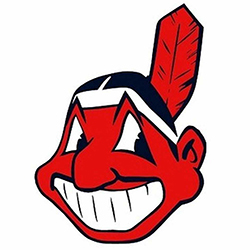
It's a caricature, nothing more, nothing less. Chief is a happy looking individual, and he has greatly exaggerated features, just like every caricature does.


Micah 6:8; He has shown you, O mortal, what is good. And what does the Lord require of you? To act justly and to love mercy, and to walk humbly with your God.

John 14:19 Jesus said: Because I live, you also will live.
Joined: Mar 2013
Posts: 18,204
C
~
Legend
Offline
~
Legend
C
Joined: Mar 2013
Posts: 18,204
Originally Posted By: YTownBrownsFan
It's a caricature, nothing more, nothing less. Chief is a happy looking individual, and he has greatly exaggerated features, just like every caricature does.


Definition of caricature
1
: exaggeration by means of often ludicrous distortion of parts or characteristics drew a caricature of the president
2
: a representation especially in literature or art that has the qualities of caricature His performance in the film was a caricature of a hard-boiled detective.
3
: a distortion so gross as to seem like caricature The kangaroo court was a caricature of justice.

Nothing more, nothing less poke

Joined: Dec 2014
Posts: 25,823
4
Legend
OP Offline
Legend
4
Joined: Dec 2014
Posts: 25,823
Originally Posted By: Vambo


Stop with the truth Vambo, it don't fly here!

People don't want to hear that living with the Indians back then was often like living with ISIS today.

Last edited by 40YEARSWAITING; 06/21/17 04:57 PM.
Joined: Mar 2013
Posts: 55,499
V
Legend
Offline
Legend
V
Joined: Mar 2013
Posts: 55,499
Why do you insist on putting words into my mouth?

I have never spoken about legislation. That was your pal 40. I have never said that a caricature has any real impact on things.

I have spoken about doing the right thing and honoring a people rather than mocking them w/some stupid representation.

Btw bro, the "side" you are on in this battle is the side posting pictures of N. Americans brutalizing poor whites and comparing them w/ISIS. LMAO............seriously!!!

Joined: Dec 2014
Posts: 25,823
4
Legend
OP Offline
Legend
4
Joined: Dec 2014
Posts: 25,823
If you know history, you know it is true. Many Indians were brutal. They also lived a way of life that didn't understand the farmer who worked for and bought his oxen. The Indian would just shoot and eat it like any other animal he came across.

I really hate to ruin your kumbaya dreams of peace but the truth is the truth.

Joined: Mar 2013
Posts: 55,499
V
Legend
Offline
Legend
V
Joined: Mar 2013
Posts: 55,499
Quote:
I understand, part of the problem though is in that image that you posted.. Native Americans don't want to be viewed as this violent, warring culture... while they did have their conflicts, they were not the warring people this image depicts..

I know it's a sports logo, teams want it to be aggressive and intimidating.. I get that.. but I can also understand why Native Americans don't want that (or silly caricatures) to be their "national face"...


I know that, DC. I wasn't saying to use that particular image. There are many they can use. It could be something like a N. American on horseback, or it could be something like this:


I am not choosing the logo. Just saying that it could be something that isn't so abrasive and demeaning.

And, everyone keeps ignoring this part. How are you being hurt if they do change the logo?

Joined: Mar 2013
Posts: 55,499
V
Legend
Offline
Legend
V
Joined: Mar 2013
Posts: 55,499
I'm pretty sure I understand history more than you do, 40.

Joined: Dec 2014
Posts: 25,823
4
Legend
OP Offline
Legend
4
Joined: Dec 2014
Posts: 25,823
Apparently not.

Joined: Jan 2013
Posts: 5,132
R
Hall of Famer
Offline
Hall of Famer
R
Joined: Jan 2013
Posts: 5,132
There were many tribal nations in the Americas who fought each other with total brutality. Very few of them were as peaceful as the Pueblo indians. The Crow and Iroquois were especially violent tribes in the east. The Comanches and Apaches were even more brutal in the midwest. They had a history of wiping other tribes out by murdering every single male and turning their women into wives/sex slaves. They practised torture and disfigurement to anyone they didn't like to the point traders who made a strong connection somehow gained a lot of political power along with huge financial gains. I get tired of the tree hugging and all are peaceful version of history that is distorted and completely false. They were very proud of their warrior nature and it's that warrior nature these logos typically aspire to.

The indians logo was always intended to be light hearted and not taken so seriously. It's also fair to view it as offensive to Indians. I don't think most folks really care though. While some folks will always find something to get their backs bent out fo shape over.


You can't fix stupid but you can destroy ignorance. When you destroy ignorance you remove the justifications for evil. If you want to destroy evil then educate our people. Hate is a tool of the stupid to deal with what they can't understand.
Joined: Mar 2013
Posts: 55,499
V
Legend
Offline
Legend
V
Joined: Mar 2013
Posts: 55,499
The Apache were in the SW, not the Midwest. And yes, many N. American tribes were brutal. However, painting whites as victims is beyond ignorant. There were also many peaceful N. Am tribes, such as the Navajo. The brutality of how the American government wiped out Native Americans is the real story.

Quote:
While some folks will always find something to get their backs bent out fo shape over.


I agree. Getting bent of shape about losing a stupid logo is dumber than hell. Boo hoo...........don't take my logo away [whine.]

Joined: Sep 2006
Posts: 27,672
Legend
Offline
Legend
Joined: Sep 2006
Posts: 27,672
Quote:
Getting bent of shape about losing a stupid logo is dumber than hell


But still not as dumb as crying about the logo to begin with. Boo hoo .... I don't like the way Chief Wahoo looks[whine]


I AM ALWAYS RIGHT... except when I am wrong.
Joined: Mar 2013
Posts: 55,499
V
Legend
Offline
Legend
V
Joined: Mar 2013
Posts: 55,499
It's best to click on the link for the pictures and video, but here is a nice story about how the poor whites were savaged by the people 40 compares to ISIS:

Quote:
U.S.
CALIFORNIA SLAUGHTER: THE STATE-SANCTIONED GENOCIDE OF NATIVE AMERICANS

BY ALEXANDER NAZARYAN ON 8/17/16 AT 10:10 AM
08_26_CalIndians_01
08/26/16

IN THE MAGAZINE

A group of soldiers pose with their guns during the Modoc Indian War in 1873. What happened to California Native Americans in the mid-19th century was not all that different from what happened to Jews, Armenians or Rwandans, says Benjamin Madley, author of 'An American Genocide."
WATKINS/ARCHIVE PHOTOS/GETTY

U.S.NATIVE AMERICANSCALIFORNIAGENOCIDE

The tally is relentlessly grim: a whole settlement wiped out in Trinity County “excepting a few children”; an Indian girl raped and left to die somewhere near Mendocino; as many as 50 killed at Goose Lake; and, two months later, as many as 257 murdered at Grouse Creek, scores of them women and children. There were the four white ranchers who tracked down a band of Yana to a cave, butchering 30. “In the cave with the meat were some Indian children,” reported a chronicle published later. One of the whites “could not bear to kill these children with his 56-calibre Spencer rifle. ‘It tore them up so bad.’ So he did it with his 38-calibre Smith and Wesson revolver.”

There have been books written about the systematic slaughter of California Indians, but none as gruesomely thorough as Benjamin Madley’s An American Genocide, from which the above accounts come. He estimates that between 9,000 and 16,000 Indians, though probably many more, were killed by vigilantes, state militiamen and federal soldiers between 1846 and 1873, in what he calls an “organized destruction” of the state’s largely peaceful indigenous peoples.

Daily Emails and Alerts- Get the best of Newsweek delivered to your inbox“I calculated the death toll using conservative estimates,” Madley tells me. “I did not want to be accused of exaggeration.” His book shows that the intent to rid California of its indigenous inhabitants was openly and repeatedly voiced, and that the means to achieve these ends were unambiguously brutal: mass deportations, slavery, massacres. He argues that what happened to California Indians was, according to the most widely accepted definition of genocide, not all that different from what happened to Jews, Armenians or Rwandans.

The debate over genocide in Native American history often turns to California, where the Native American population fell dramatically, from about 150,000 to 30,000, in the middle decades of the 19th century. It has since rebounded, so that California has the largest Native population in the United States today, with about 723,000 Indians, including many who belong to the state’s 110 federally recognized tribes. The state is a microcosm of Indian country—and it is there, many believe, that Manifest Destiny culminated in the only way possible, with historians Robert Hine and John Faragher calling it “the clearest case of genocide in the history of the American frontier.”

08_26_CalIndians_04
Prospectors pan for gold during the California Gold Rush in this illustration circa 1850. Violence against Native Americans reached its peak during the Gold Rush.
HULTON ARCHIVE/GETTY

Where’d They All Go?
A neatly dressed 44-year-old, Madley looks less like a genocide scholar than a promising “Silicon Beach” junior executive. As we eat dinner at a crowded Santa Monica steakhouse, we might pass for two members of the local tech scene, though the waitress who brings our victuals catches alarming bits of conversation about massacres and mass graves that suggest we are not working on a data compression algorithm.

I first met Madley, a professor of history at the University of California, Los Angeles, on a warm spring day on the grounds of University High School in West Los Angeles, which is also a sacred site for the Tongva people, native to this region; their sacred springs sit on the UHS grounds, fenced off. The main spring remains active, and though I was told by my guide that pollutants have dirtied the water, this did nothing to disturb the surreally peaceful mood of the place. That was broken, however, by frequent sounds that very much resembled gunshots: A school track meet was taking place on the other side of the chain-link fence.

Today, the plain one-story building on the Kuruvungna Springs grounds functions as a museum and community center; 20 years ago, it was a classroom, and a significantly younger Ben Madley took German classes there. Back then, the UHS mascot was an Indian, adorned as such mascots often are, with a war bonnet. Madley had grown up around Indians—his father had been a psychotherapist on the California-Oregon border, working with the Karuk people there—so he knew that California Indians did not wear war bonnets, that these were the regalia of Plains tribes. He also knew that the spring, then overgrown, bore some significance to the people who had been there before, the people who were ostensibly memorialized by the school’s mascot. He tells me, “I started to wonder, ‘Where are all the Indian people?’”

08_26_CalIndians_07
Members of the Round Valley Indian Tribe retrace the 1863 route of the Nome Cult walk in 2013, commemorating the 100th anniversary of the Konkow Maidu Trail of Tears. The route signified the forced relocation of Indians from Chico, California, to Covelo, California.
UNITED STATES FOREST SERVICE


As an undergraduate at Yale, he studied the slaughter of Tasmanian Aborigines by British colonists in Australia. Returning to New Haven as a graduate student years later—after forays into venture capital, online philanthropy, fish farming and, briefly, selling industrial equipment to the Japanese—he turned his focus to his native state. In the morning, he would walk through the Woolsey Hall rotunda, with its tally of Yale men who’d died in conflicts throughout American history.

“I need to have something like that for California Indians,” Madley decided.

He spent the next decade trying to compile a record of every single act of deadly violence perpetrated against the Native American people of California during the Gold Rush and its aftermath. Although the resources were scattered, they were plainly available in state and federal archives, as well as in university libraries from Berkeley, California, to Hanover, New Hampshire. There was no attempt to conceal what was done to the Indians in California. “A massacre, a lynching or a whole killing campaign—these things were hidden in plain sight.

”Madley found the murderers acted under the sanction of state and federal government. Feelings of racial superiority were deployed to justify the killing; greed supplied the sense of urgency. California’s statehood, in 1850, came two years after the discovery of gold. This was also the decade when the slaughter reached its apogee. Three hundred thousand came seeking gold. It happened that many of the goldfields in Northern California lay in the ancestral lands of tribes like the Karuk, the Wintu and the Miwok—all of which remain in California, diminished survivors of an unwholesome past.

It was a widely held belief in 19th-century California that all of the Indians had to be exterminated. Reported the Daily Alta California, “Whites are becoming impressed with the belief that it will be absolutely necessary to exterminate the savages before they can labor much longer in the mines with security.

”The killing of Indians was performed for reasons that seem, today, pathetically feeble. Madley describes how one vigilante gang, called the California Blades, set about destroying Nisenan villages over several missing mules.

The United States Army often participated in the mass killing, making Capitol Hill complicit in what was happening in the goldfields of the Sierra Nevada and elsewhere in California. In the winter of 1849, Indians wanting freedom killed Andrew Kelsey and Charles Stone, two slavers in what is today Lake County. In revenge, federal infantry and cavalry detachments attacked a village at Clear Lake. On May 15, 1850, they “poured in destructive fire indiscriminately upon men, women and children,” according to one account. As many as 800 members of the Pomo tribe were killed at what has come to be known as Bloody Island. “It took them four or five days to gather up the dead,” one survivor remembered.

A village of Yokayas on the Russian River was attacked by U.S. troops just days later, in what their commander deemed “a perfect slaughter pen.” Yokaya casualties may have been as high as 100. The U.S. troops lost no men, though two suffered wounds.

Much of the slaughter was carried out by state militias, which enjoyed financial support from both Sacramento and Washington, D.C. In Round Valley, north of San Francisco, the Eel River Rangers were so prolific in their murder of the Yuki that even some white observers became alarmed. “The killing of Indians is a daily occurrence,” reported California’s head of Indian affairs. “If some means be not speedily devised, by which the unauthorized expeditions that are constantly out in search of them can be restrained, they will soon be exterminated.”


08_26_CalIndians_06
A Yurok man paddles in a redwood canoe on Trinity River in 1923. Yurok people paddled dugout redwood canoes as a traditional form of transportation and to fish on the Klamath and Trinity rivers in Northwestern California.
EDWARD S. CURTIS/LIBRARY OF CONGRESS

One of the killers sent a bill to California: $11,143. The state paid it nearly in full. Madley notes that of the $1.5 million that California spent on 24 different Indian-killing militia campaigns between 1850 and 1861, Congress paid the state back all but $200,000.

Others have described some of these campaigns, but never in such strong terms and with so much blame placed directly on the United States government. Detractors of the Indian genocide version of history tend to portray historians like Madley as left-wing revisionists informed more by guilt than fact. The foremost of these critics is Gary Clayton Anderson, a professor at the University of Oklahoma. Anderson insists that what happened to Native Americans during colonization was ethnic cleansing, not genocide. “If we get to the point where the mass murder of 50 Indians in California is considered genocide, then genocide has no more meaning,” he says. Anderson tells me that, by his estimate, no more than 2,000 Native Americans were killed in California.

“I have no idea where he got that number,” Madley says.

I ask Madley if he was prepared to be branded “un-American” for suggesting the nation had committed atrocities on a par with Nazi Germany. Though he grasped that I was being intentionally provocative, he gave me a look split equally between astonishment and dismay. “What is un-American,” he says, “is skewering babies on bayonets, using the butt of the rifle to bash their parents’ heads apart and then shooting anybody who’s still alive.
“That’s what’s un-American.

”Another Final Solution

Around the time Madley was finishing his manuscript, in the fall of 2015, Pope Francis arrived in the United States. During his first stateside visit, the pope canonized Junípero Serra, the 18th-century Franciscan missionary from Spain responsible for the first nine of California’s famous Catholic missions, of which 21 still stand. During the canonization, the pope praised Serra’s devotion and evangelism while also noting that Serra “sought to defend the dignity of the native community, to protect it from those who had mistreated and abused it.

”Three days later, Mission Carmel, where Serra is buried, was struck by vandals who apparently disagreed with the pope’s generous assessment. They toppled a statue of the newly minted saint, splashed paint on walls and defaced surfaces with graffiti. “Saint of genocide,” one scrawled message said.

08_26_CalIndians_03
Pope Francis pauses in front of a sculpture of Spanish-born Franciscan Friar Junipero Serra in Statuary Hall at the U.S. Capitol in Washington, D.C. on September 24, 2015.

MICHAEL REYNOLDS/REUTERS

The Gold Rush and the years that followed may have marked the bloodiest period of white-Indian relations, but there was plenty of cruelty before—and after. The Mexicans ceded control of California to the United States in 1846, which is why Madley begins An American Genocide in that year. He ends it in 1873, with the Modoc War, which concluded with four Modoc leaders hanged and beheaded, their heads sent to the Army Medical Museum in Washington. After that, organized mass killings became less frequent.

But that hardly meant the suffering was over for Indians, in California and elsewhere in the United States. Reservations were established in the mid-19th century, and the conditions there were so brutal, Adolf Hitler is said to have used them in part as a blueprint for his Final Solution. On the Round Valley Reservation, Native Americans were getting only between 160 and 390 calories a day from federal officials, as part of what Madley calls “institutionalized starvation conditions.” Eighty years later, the daily ration for prisoners at Auschwitz was 1,300 calories.

The Sugar-Cube Missions

When my wife was a young girl, she, her mother and grandmother toured the California missions, the very ones founded by Serra and his fellow missionaries. Like just about every fourth-grader in the California public school system, she also built a model mission out of sugar cubes, during a standard curriculum unit on California history. The state’s practice is to portray the missions as quaint symbols of a benign institution that marked the true beginning of California, which is to say the beginning of white California.

Almost everyone I spoke to for this story mentioned the sugar cube missions, for they reveal much about how we teach American history, sweetening depredations until the bitterness is gone. Of course, there is a limit to how much depravity a 9-year-old can grasp. Which may be the point. Consigning the history of California Indians to the fourth grade is a convenient means of forgetting it. And yet the same state that now teaches the Armenian genocide and, earlier this year, amended history textbooks after complaints from some South Asians is hesitant to look deeply into its own history.

My wife went to a middle school in Sacramento named after John Sutter, the celebrated Swiss colonist who was also an Indian slaver. Nearby is a middle school
named after Kit Carson, who served as a scout for John C. Frémont and participated in some of Frémont’s most notorious massacres.

Frémont’s name is all over California: a street in San Francisco, a city in the Bay Area. Countless place-names in California include the word squaw, an obscene term for Native American women. The most famous of these is the ski resort at Squaw Valley, near Lake Tahoe, but there is also Squaw Creek, Squaw Canyon and many others.


08_26_CalIndians_02

American explorer and statesman Major General John Charles Fremont, general for the Union Army during the U.S. Civil War, poses in his uniform with his sword, circa 1861.

In 1856, Fremont became the Republican party's first presidential nominee and was one of four major generals appointed by President Lincoln during the Civil War. He was decommissioned three months later for his unorthodox methods.

HULTON ARCHIVE/GETTY


Another derogatory term for California Indians, digger, is attached to the Pinus sabiniana tree, commonly known as the “digger pine.” Last year, Governor Jerry Brown signed a bill that prevented public schools from using Redskins as a team name or mascot.

That step is laudable but slight, especially in a nationwide context: A 2014 analysis by the polling site FiveThirtyEight found more than 2,100 sports teams in the United States using Indian team names like Redmen and Warriors. Plenty of such teams still play in the Golden State.

Madley concludes An American Genocide with a discussion of place-names, which he says raise “awkward questions.” If we spurn the name of Robert E. Lee, why do we accept that of John C. Frémont?

Don’t red lives matter as much as black ones? “If we call it genocide, then something has to be done,” he says. “We have to speak about it, we need to remember it, we need to memorialize it. And we need to teach it.

”Presumably, this would be a lesson without sugar cubes.

The Ravages

On a hot spring afternoon, I drove south from the Bay Area, past the office parks of Silicon Valley, into an inland golden country untouched by ocean breezes. Less than an hour’s drive south of San Jose, the Hollister Hills felt somehow primeval, raw.

The roads got thinner and more sinuous, until I was on a dusty one-lane path winding past a vineyard, fearing I’d missed my turnoff for Indian Canyon.It makes sense that Indian Canyon would be so remote: It was even more so when Cienega Road was a swamp, not just a thoroughfare named for one. This is where the Costanoan/Ohlone people escaped from the nearby Mission San Juan Bautista, knowing that whites would not pursue them into the hilly wilderness.

Indian Canyon thus became a long-standing sanctuary from the ravages of colonialism.Today, Indian Canyon remains in Indian hands: Though it is not a reservation, it is a federally recognized tribal land, which gives it some of the same sovereignty.

It is run as a sort of spiritual retreat by Ann Marie Sayers, an energetic woman with a penchant for fragrant Benson & Hedges cigarettes. Sayers grew up here, on land her predecessors reclaimed from the federal government.

After living in Southern California, she returned to Indian Canyon and further expanded its land holdings by adeptly citing historical claims. Today, she lives with her daughter and several dogs of varying ferocity on 300 minimally tamed square acres. Poison oak grows with alarming fecundity.

Sayers took me on a tour of Indian Canyon, a gash in the mountains about a mile long. Wilderness hemmed us in, threatening to close up this little stream of civilization.

In glades, there were sweat lodges and gathering places: Tribes often come here to perform ceremonies they can’t host elsewhere.

Recently, a holocaust ceremony had been held; Indian Canyon also hosts a run from Mission San Juan Bautista, to honor the path ancestors took to freedom.As we walked the grounds, Sayers picked leaves of poison oak, utterly unafraid of its infamous effects. She could always rub a little mugwort, if need be. Her one-with-earth attitude, part Ohlone and part Beverly Hills, reminded me that much of the green thinking popular today reworks Native American attitudes about the land, its sanctity and its wisdom.

The farm-to-table movement is, in part, a repudiation of Big Agra and a return to the kind of season- and climate-aware cooking that Native Americans prized long before the culinary wizards of New York and San Francisco put raw kale on a plate. Holistic medicine has its roots in Eastern practices but also Native ones. Perhaps instead of merely celebrating Native Americans we can finally learn from them.

08_26_CalIndians_05
Kathleen Navales, left, and Delphina Garcia Penrod comfort each other while honoring their ancestors inside the cemetery at the Carmel Mission in Carmel, California, on September 23, 2015.

MICHAEL FIALA/REUTERS

Then I drove home, through the town of Hollister, which was once Mutsun Ohlone land, and past Fremont, the Bay Area city named for the famed Indian killer. Then Oakland, which has a health center dedicated to Natives, and Berkeley, where the famous university’s Hearst Gymnasium pool has been thought to be haunted because of the 12,000 Native remains stored beneath it.

Recent construction in West Berkeley, on the waterfront, unearthed an Ohlone burial site, a reminder that there were people here before the whites came and decided that these golden hills, and this sparkling bay, were going to be the last and greatest acquisition of their empire.Those people, the Indians, survive in part as place-names: Yosemite National Park, Mojave Desert, Ohlone Greenway. But so do the people who brought about their destruction: Frémont, Carson, Sutter.


The blood has dried. The battles continue.

http://www.newsweek.com/2016/08/26/california-native-americans-genocide-490824.html

Joined: Mar 2013
Posts: 55,499
V
Legend
Offline
Legend
V
Joined: Mar 2013
Posts: 55,499
I am not crying at all. I am simply pointing out that I do not like bigots and that an attachment to a logo is lame.

Joined: Mar 2013
Posts: 55,499
V
Legend
Offline
Legend
V
Joined: Mar 2013
Posts: 55,499
Here is another story about the group that 40 compares to ISIS and those poor, innocent whites:

Quote:
Professing Faith: Story of betrayal, loss of faith and heroism
By Gregory Elder
POSTED: 05/04/16, 8:07 PM PDT | UPDATED: ON 05/04/2016 0

Here is a story of tragedy and suffering, a loss of faith and defeat. But it is also a story of heroism and the American spirit that deserves to be remembered.

It is the story of the great Native American chiefs of the Nez Perce peoples, Old Chief Joseph and his son, Young Chief Joseph, who led the U.S. Army on a not very merry chase across the West, in the longest military retreat in American history.

Old Chief Joseph was the leader of the Wallowa Band of the Nez Perce Indians, who had lived from time immemorial on territory which spanned large sections of land in what is now Oregon, Washington and Idaho. He lived between 1785 and 1871, the period of U.S. expansion into traditional Indian lands.

Old Chief Joseph had some respect for the new American peoples, he listened to their missionaries and accepted baptism, taking the name of Joseph for himself and his son. St. Joseph was the foster father of Jesus, and so it was deemed an appropriate name for a great protector chief of the Wallowa Nez Perce.

Moved by his new faith into an acceptance of a spirit of peace, Old Chief Joseph worked with the territorial governor of Washington to surrender significant portions of their land to settlers, with the promise that the white man would stay out of the Wallowa Valley, which was sacred ground and the burial place for the Indian peoples.

But after a treaty was signed to this effect, gold was discovered on Nez Perce land, and prospectors and settlers flooded the Indian territory. The United States annexed six million acres of the land promised by treaty to the Nez Perce, leaving them one tenth of their lands.

Horrified by this betrayal of his trust, Old Chief Joseph shredded his Bible, tore up his American flag and refused to accept the new laws.

On his deathbed in 1871, Old Chief Joseph told his son the following.

“My son, my body is returning to my mother earth, and my spirit is going very soon to see the Great Spirit Chief. When I am gone, think of your country. You are the chief of these people. They look to you to guide them. Always remember that your father never sold his country. You must stop your ears whenever you are asked to sign a treaty selling your home.

“A few years more and white men will be all around you. They have their eyes on this land. My son, never forget my dying words. This country holds your father’s body. Never sell the bones of your father and your mother.”

Two years after his father’s death, Young Chief Joseph persuaded the officers of the U.S. government to allow the Nez Perce to at least be allowed to keep their sacred Wallowa Valley.

But in 1877, the United States reversed its policy and ordered Young Chief Joseph to abandon his lands.


In peace talks, Chief Joseph demanded to know why the United States seemed to think that the Great Creator Spirit gave some men the authority to tell others what to do. The U.S. military officers told Joseph that if he did not leave his lands in 30 days, it would be considered an act of war.

Meeting with the tribal elders, Chief Joseph advocated peace, even if it meant losing their sacred lands and burial grounds. But while tribal leaders were still in discussion, word was brought to them that their lands were already being invaded and Indians were being killed before the 30 days were up.

Joseph resolved to lead as many of his people as would follow him to freedom in Canada, where Sitting Bull of the Lakota people had already found some refuge.

With 750 of his people, of whom 200 were warriors, he set off with the U.S. Army in pursuit. In U.S. history, this is called the Nez Perce War.

Chief Joseph and his people evaded and fought the U.S. Army for almost a year, running 1,170 miles across Oregon, Washington, Idaho and Wyoming. The Nez Perce were outnumbered and outgunned, but they could not be caught.

Joseph had the ability to vanish into the night, strike the U.S. Army when they least expected it and disappear without a trace.

Both the U.S. Army and the American public were awed by the Indian general who could not be caught.

Only 40 miles from freedom and the Canadian border, the Nez Perce were finally surrounded, and in a five-day battle held off the U.S. Army against all odds.

But when his leadership team was killed, his people had fled in terror and all food was expended, Chief Joseph surrendered to Gen. Nelson Miles on Oct. 5, 1877.

His words of surrender are supposed to have been these:

“Tell General Howard I know his heart. What he told me before, I have it in my heart. I am tired of fighting. Our chiefs are killed; Looking Glass is dead, Too-hul-hul-sote is dead. The old men are all dead. It is the young men who say yes or no.

“He who led on the young men is dead. It is cold, and we have no blankets; the little children are freezing to death. My people, some of them, have run away to the hills, and have no blankets, no food. No one knows where they are — perhaps freezing to death. I want to have time to look for my children, to see how many I can find. Maybe I shall find them among the dead.

“Hear me, my chiefs! I am tired; my heart is sick and sad. From where the sun now stands, I will fight no more forever.”

After he was released from prison, Chief Joseph continued to advocate for Native American rights, meeting with politicians and generals including presidents Rutherford B. Hayes, Ulysses Grant and Theodore Roosevelt. He begged that his people be allowed to return to their promised Wallowa Valley.

He was universally honored for his courage and leadership. And his pleas for his people were always ignored.

In 1879, in Washington, D.C., he declared to a huge audience:

“Whenever the white man treats the Indian as they treat each other, then we shall have no more wars. We shall be all alike — brothers of one father and mother, with one sky above us and one country around us and one government for all. Then the Great Spirit Chief who rules above will smile upon this land and send rain to wash out the bloody spots made by brothers’ hands upon the face of the earth. For this time the Indian race is waiting and praying. I hope no more groans of wounded men and women will ever go to the ear of the Great Spirit Chief above, and that all people may be one people.”

Chief Joseph the Younger died in what is now Washington state on Sept. 21, 1904. The attending doctors declared that he “died of a broken heart.”

Gregory Elder, a Redlands resident, is a professor of history and humanities at Moreno Valley College and a Roman Catholic priest. Write to him at Professing Faith, P.O. Box 8102, Redlands, CA 92375-1302, email him at askfathergregory@verizon.net or follow him on Twitter at @Fatherelder.


This is one of the most shameful acts in American history!

Joined: Dec 2014
Posts: 25,823
4
Legend
OP Offline
Legend
4
Joined: Dec 2014
Posts: 25,823
Here is another story about the group that Vers compares to Hippys and those poor, sweet Indians:

The Battle of Wyoming Pa.

Fleeing soldiers were chased down and killed; many captives were tortured and then scalped. (Upon their return to Fort Niagara, the Indians collected bounty payments for 227 scalps.) Some of the American soldiers escaped to Forty Fort, but the next morning that fort was surrendered to the British. The Indians went on a rampage throughout the Valley, burning homes and destroying crops and cattle.

https://www.geni.com/projects/American-Revolution-Battle-of-Wyoming-Pennsylvania-1778/25793

There is a marker to show the site of Queen Esters Rock where Queen Esters of the Indians had the captives lined up single file and one by one their heads were smashed with a maul.

The women and children who had escaped to the surrounding mountains reported hearing the tortured screams of their captive men all through that first night.


Last edited by 40YEARSWAITING; 06/22/17 08:25 AM.
Joined: Sep 2006
Posts: 40,221
B
Legend
Offline
Legend
B
Joined: Sep 2006
Posts: 40,221
All that said, it's still no reason to eliminate the logo's.

My great-great Grandmother was full blooded Blackhawk. Count me as a native who doesn't care.


If everybody had like minds, we would never learn.

GM Strong


[Linked Image]
Joined: Mar 2013
Posts: 55,499
V
Legend
Offline
Legend
V
Joined: Mar 2013
Posts: 55,499
Why do you feel the need to lie? Where did I compare them to hippies? Where did I say they were sweet? I even said many were brutal.

On the other hand, you did compare them to ISIS. I can prove it if you like.

I have a question for you, 40: If a group of people came to here now and were taking your land and destroying your resources, would you sit back peacefully and allow them to do so? Or, would you fight w/brutal intensity?

Joined: Mar 2013
Posts: 55,499
V
Legend
Offline
Legend
V
Joined: Mar 2013
Posts: 55,499
All that said, keeping the logo because some old, bigoted white dudes "just love their little logo" is no reason to keep it.

Y'all can cry, whine, and stomp your feet about how much that little logo means to you and how you can't live w/out it, but in reality............it's a dumb cause that is laughable, at best.

Joined: Sep 2006
Posts: 40,221
B
Legend
Offline
Legend
B
Joined: Sep 2006
Posts: 40,221
I am not crying and stomping. I wasn't before, and wouldn't be had the ruling gone the other way.

I am just gald it is what it is.

If you don't like the ruling, don't support the teams.


If everybody had like minds, we would never learn.

GM Strong


[Linked Image]
Joined: Dec 2014
Posts: 25,823
4
Legend
OP Offline
Legend
4
Joined: Dec 2014
Posts: 25,823
Stop being so offended by my saying the people of the past would compare the Indians to ISIS today.

The Settlers were trying to build a life while the Indians would raid, kill livestock, kill their loved ones and burn their houses. The Settlers never knew when there would be another terrorist attack. They eventually decided to wipe them out.

Sound familiar to you in any way?

Joined: Dec 2014
Posts: 25,823
4
Legend
OP Offline
Legend
4
Joined: Dec 2014
Posts: 25,823
Bye the way, the Indians did develop, by using Pine Bark and Hemp, a cure for the Lily Liver. rofl

Joined: Apr 2007
Posts: 6,445
H
Hall of Famer
Offline
Hall of Famer
H
Joined: Apr 2007
Posts: 6,445
Originally Posted By: Ballpeen
I am not crying and stomping. I wasn't before, and wouldn't be had the ruling gone the other way.

I am just gald it is what it is.

If you don't like the ruling, don't support the teams.

That is one approach. Another, milder one would be for people who don't like the logo to simply not buy or wear that merchandise. Let people decide for themselves what they should wear.

Personally, I prefer the simpler look of the block C logo. If others want to wear merchandise with Chief Wahoo, more power to them.

Joined: Sep 2006
Posts: 4,480
C
Hall of Famer
Offline
Hall of Famer
C
Joined: Sep 2006
Posts: 4,480
Originally Posted By: Versatile Dog
All that said, keeping the logo because some old, bigoted white dudes "just love their little logo" is no reason to keep it.

Y'all can cry, whine, and stomp your feet about how much that little logo means to you and how you can't live w/out it, but in reality............it's a dumb cause that is laughable, at best.

So you are saying that everyone that likes the logo is a bigoted white dude? I'm not hearing a lot of whining either, some people like it and others don't. It doesn't mean you're a bigot if you do, just as if you voted for Trump doesn't make you a bigot. I'm tired of all this "if you believe in <insert political hot issue> then you are <insert absurd generality>. Both "sides" do it and it is ridiculous.


#gmstrong
Joined: Sep 2006
Posts: 78,054
P
Legend
Offline
Legend
P
Joined: Sep 2006
Posts: 78,054
I don't know who's "side" you think I'm on. I don't have a side and I don't align myself with others. My opinion is strictly my own.

I simply do not believe that a caricature does harm to anyone. I believe the issue is overblown. I don't fault you for having a differing opinion and don't appreciate you labeling others as a bigot because they don't share your view.


Intoducing for The Cleveland Browns, Quarterback Deshawn "The Predator" Watson. He will also be the one to choose your next head coach.

#gmstrong
Page 2 of 4 1 2 3 4
DawgTalkers.net Forums DawgTalk Everything Else... Hail to the Redskins, Go Indians and Chief Wahoo!

Link Copied to Clipboard
Powered by UBB.threads™ PHP Forum Software 7.7.5