I didn't read but the original post but I think I may have something to add to this.
Some of you may know but most likely no one does but Bone has 2 little girls there 7.
Their 1st year we put both our kids in the same class ( the school asked).
Year two (this year) both kids decided they would like to be separated and so they have gone thru 1st grade in different classes.
Well don't you know it we saw and see a stark contrast between the 2 different teachers, its almost alarming its so different.
One teacher pushes the children to learn starting with reading and writing and spelling and forming sentences. She gives us weekly updates on how our child is doing and my daughter (proud dad) easily reads at a 7th 8th grade level and has a vocabulary that is nearly adult. But the weekly updates tell us in real time how she is progressing and where she needs work.
My second daughters teacher gives her half the work and doesn't correct her writing ever. Its like your doing something wrong but you don't know its wrong so you keep doing it wrong because you don't know. The only updates we get on her progress come in the form of a report card.
To sum up one daughter is learning the other daughter is learning too but at a much slower pace, and she isn't forming good work habits all important tools to being successful.
We stay on top of it and both daughters have been the student of the month in the school in fact the principle wrote a note home telling us what great parents we were, and we make up for what the 2nd teacher isn't getting done (lazy). But my point would be don't assume your child is getting the instruction they need. it taught the wife and myself to get involved and stay involved because some teachers SUCK.
BTTB
AKA Upbeat Dawg
Can't believe I am in a group that is comprised of the best NOT just fans but people on the planet.
Not sure where you get your assertion about how much the United States spends on education compared to South Korea but according to what I found is the US is 4th in the world on spending while South Korea is in the 20's. Beyond this point and your statement about weapons, I agree with most of what you say.
You pointed out the difference between how parents in South Korea are engaged in their children's education and that is the key. Parents that are engaged have children that are better educated in my opinion. When I went to school many many years ago my parents took an active interest in our education and every one of my siblings and I have great paying jobs. Those of my neighbors and cousins who didn't have parents doing so seem to struggle economically. I wouldn't want to be a teacher today. The pay in the private sector is much better, you have to deal with overreaching government mandates, little to no respect by some students and parents, and long unpaid hours just to name a few. This is a perspective I have gained through many family members that have made teaching their profession.
The Constitution shall never be construe to prevent the people of the United States who are peaceable citizens from keeping their own arms. – Samuel Adams
I was always ahead of other kids growing up ..... and I know it is because my mom read to me every night when I was a kid, and taught me to read long before any of my peers could/did. I tested at a 6th grade level in reading in 1st grade. (so I have been told, I really don't remember for myself) I was often bored with school, and when other kids struggled with writing sentences using vocabulary words, I asked the teacher if I could write stories. (True story. Yes, I was a geeky kid in that regard, and would often turn in 5 or 6 pages of writing for my homework assignment that called for using 10 words in sentences.
I seem to recall a classmate ...though it has been so long ago that I can't say for certain if I am remembering this correctly ..... but anyone, I seem to recall a kid who did his vocabulary assignment like this:
"The Teacher said that I had to use word in a sentence.", or some derivative, for his entire homework assignment. I think she made him redo his assignment.
When I went back to college many years ago, after way too many years away from school, I was amazed at how highly my writing skills were though of my the teachers and other students. On the 1st day of Freshmen Composition, we had to do a "diagnostic essay", with which the teacher could determine where we were with regard to writing ability and skill.
She kind of started at the bottom when handing the papers back, and ended with just mine in her hand. She then read it to the class as an example of how to formulate an idea, and and argument. (all those years on message boards paid off)
I think that writing, and the ability to develop a cognizant argument, is a skill set that should be developed to the fullest in all children. I think that it helps develop a healthy sense of self esteem in a child when they can effectively communicate to the world. Those who cannot will almost certainly never be able to lead. A person who can effectively communicate will often get a job over one who cannot, even if they may not be the most qualified in many other ways. Effective communication is vital in the world, and especially today in such a constantly connected world.
I am sure that you are right about learning math formulas and such, but in the 3 careers I have held as an adult, insurance sales, car sales, and restaurant management, I have always been able to learn the calculations I needed to know in order to calculate the things I needed to calculate without an in depth knowledge of calculus.
It is nice to be able to understand how to calculate how to center a piece when doing a building project, but that is also rather rudimentary by comparison to trigonometry.
I never had such headaches as trying to memorize and understand all of the formulas when I took math classes in college. I managed to stumble through them, but frankly, I would rather have been given a 20 page essay assignment than a page full of problems with angles and formulas.
Micah 6:8; He has shown you, O mortal, what is good. And what does the Lord require of you? To act justly and to love mercy, and to walk humbly with your God.
John 14:19 Jesus said: Because I live, you also will live.
Not sure where you get your assertion about how much the United States spends on education compared to South Korea but according to what I found is the US is 4th in the world on spending while South Korea is in the 20's. Beyond this point and your statement about weapons, I agree with most of what you say.
Teachers, and schools, cannot educate kids that see no point in learning.
Schools, and teachers, cannot educate (effectively) kids that get little to no support from home.
Teachers cannot educate when they have to spend too much time playing "babysitter".
Throwing money at these problems is just that: throwing money at a problem knowing the money doesn't change things.
Not sure where you get your assertion about how much the United States spends on education compared to South Korea but according to what I found is the US is 4th in the world on spending while South Korea is in the 20's.
I think his assertion was regarding the amount that Korean families spend on their kids education OUTSIDE of school on private tutors, learning academies, etc.. the families private investment in the kids education is significantly greater than in the US, which I can understand. I know parents that get upset when the list comes home at the beginning of the year and the teacher requests $20 worth of dry erase markers and tissues... I've heard more than one parent say, "If I need to buy this stuff, why am I paying taxes?"
We have created a culture of dependence... So many parents believe that the school is not just there to teach them math and english, but to teach them to behave, teach them to share, teach them about sex and drugs, teach them manners, teach them to dress appropriately, provide them a free place to pursue their sports ambitions, feed them, provide for them before and after school, etc... This stuff should all be taught and provided at home, stressed and reinforced at school, but taught and demanded at home.
Just a few thoughts since i'm ignorant on schools/teachers problems.
i've already knocked out all my Math requirements for my degree. i had already taken AP Calculus in the 11th grade, and took some business math at Tri-C while still in high school.
I killed it on the ACT's and SAT's.
my homeboy was the one who TAUGHT me math for the most part in HS. he was teaching me short cuts and really explaining different methods and stuff. he is the same age as me.
he absolutely bombed when it came to taking the SAT's and ACT's, and other placement test. he just wasn't a good test taker.
Fast forward today, and i'm not feeling these common core math trash they are putting out there. I'm an absolute beast in math, but some of those question had me scratching my head.
Every country has some type of testing, but man, we seem to have way too MANY test. and yes, our teachers are teaching for us to pass the test, not simply learning.
Some posters said we already spend the most on education, but i'm sorry, WHERE?
cause that was true even when i was in high school, yet before my parents put me in private school, the public school i went to had busted computers, we didn't have enough books for all the kids to take home, so we barely had homework, and when a teacher was absent, we didn't HAVE a substitute. yes, we sat in class by ourselves.
So somebody tell me where all this money is going to? cause we didn't see it at a student level. at all.
it's the same thing with the infrastructure problem. Somebody said we already spent a lot of money on it.
ok...so where did it go? cause there was barely any improvement.
it's like we don't have anybody watching over this stuff. when it comes to our kids, this stuff NEEDS to be micromanaged. Sorry, but funding an issue and hoping everybody does there job doesn't work in education. it barely works anywhere else. there needs to be some serious oversight.
we are in the 20's in math and science. freaking third world countries are whooping our asses.
It just blows my mind.
Our education sucks, our infrastructure sucks, our social issues suck.
Dumbing down of America? I know why that is.
We got politicians stuck in the glory days of when being called a superpower meant having the best military.
Everybody else in the world is progressing. We are still raving about our old ass economy.
We have a lot of the best colleges in the world.
Too bad our K-12 graders can't even get in em.
“To announce that there must be no criticism of the President, or that we are to stand by the President, right or wrong, is not only unpatriotic and servile, but is morally treasonable to the American public.”
I agree that the fundamental reason for our failing education system does not rest on the backs of our teachers. Sure there are some teachers who are not the greatest. Just as with every profession there are people extremely good at their jobs as well as those that are poor at their jobs. So it's not that bad teachers don't exist, but I don't believe it's at the level that some sources have suggested.
And I do agree that unless we have actually been in an urban classroom we can not fully understand the obstacles that stand in the way of teachers. I do however agree with those that say the environment of the home and the participation of the parent is essential. While I don't see it as the only factor in every case, it's a huge difference in most cases.
My parents were very active in my education even before I was old enough to attend school. As a result it put me far ahead of the curve early on in my education. I was extremely lucky to go to a small, suburban school in mainly a farming community. We had small classes and were taught with a large amount of personal responsibility involved.
In Junior High School we were taught how to budget an income and manage a checking account. VERY rarely were we allowed to use a calculator in class. As a child growing up, I thought my teachers were too tough and the rules of my school too rigid. However, as I got older I realized the importance and role that my education played in my life.
I'm thankful for the type of education I received and the setting I was raised in. We were by no means a well to do family. My dad bought a much older home on the cheap and we did a total re-model of the house to make it a nice, but modest home. We gardened, gathered berries and walnuts. We hunted and fished.
All of this is what I consider a part of my education. There were no hand outs. What little allowance I got, I had to work hard for. Many of the "extras" I wanted as a teen I had to pay half of the cost. However, my dad always made it possible for me to work and earn the money I needed to do so.
My parents were every bit as much, if not more so a part of my education as my teachers were and I believe these are the ingredients that make for a well balanced person.
jmho
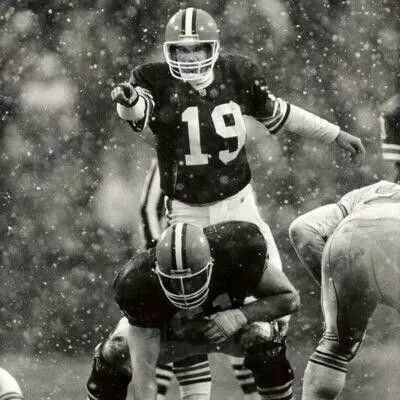
Intoducing for The Cleveland Browns, Quarterback Deshawn "The Predator" Watson. He will also be the one to choose your next head coach.
it's like we don't have anybody watching over this stuff. when it comes to our kids, this stuff NEEDS to be micromanaged. Sorry, but funding an issue and hoping everybody does there job doesn't work in education. it barely works anywhere else. there needs to be some serious oversight.
I'm going to disagree with you. I know you were in the military, I've done a lot of government construction, I've had kids in schools... it's very micromanaged, in fact I'd say it's TOO micromanaged. Earlier in this thread I listed the number of administrative people that work at my sons high school, it's about 4x the number of people that ran the high school I went to.. and that's where a lot of the money is going, to pay people to micromanage, so what needs to get to the students in the form of textbooks and supplies, never does.
It's the same for government construction and infrastructure improvements... the government will have $20,000 worth of meetings to determine if something is $5,000 over budget. There is too much management, too many hands in the pot that have to approve stuff... When I submitted an invoice to the government to get paid, no fewer than 6 people had to approve it, and this was a $2000 invoice. If a subcontractor submits something to me now to be paid, 2 people, me to sign off on it, the accountant to write the check.. done.
I agree with checks and balances and oversight but at some point (and the government passed that point a long time ago), it becomes self defeating... you are spending more to make sure you get the best deal or don't get ripped off than you would if you just took the risk and assumed that once in a while you aren't going to get the best deal and once in a while you might get ripped off..
so at some point during the chain of command phase, the money is coming to a stop.
Last edited by Swish; 05/29/1504:37 PM.
“To announce that there must be no criticism of the President, or that we are to stand by the President, right or wrong, is not only unpatriotic and servile, but is morally treasonable to the American public.”
so at some point during the chain of command phase, the money is coming to a stop.
I believe his point, and I would tend to agree, is that too much money is being spent on staff to oversee everything which doesn't leave enough money to do the essential job of educating children.
If your staff has quadrupled, so has the cost of paying the staff. The staff is eating the money.
Intoducing for The Cleveland Browns, Quarterback Deshawn "The Predator" Watson. He will also be the one to choose your next head coach.
so, if less micromanaging wasn't working, and more definitely isn't because of funding,
then what?
“To announce that there must be no criticism of the President, or that we are to stand by the President, right or wrong, is not only unpatriotic and servile, but is morally treasonable to the American public.”
so at some point during the chain of command phase, the money is coming to a stop.
It isn't coming to a stop, it's being siphoned off..
If the school has a million dollars and it has to pay it's administrative costs then what's left goes to the kids... if it has 3 people to pass that money through, who make $100,000, then the students get $700K.. if it has 7 people, then the students only get $300K..
We have curriculum directors - as we're told, the state basically requires them. Assistant C.D.'s. We have, for the elementary and middle schools - playground directors, lunch room monitors, assistants to assistants, intervention directors, intervention specialists, reading tutors, psychologists, technology managers, tech assistants, special needs directors, special needs assistants.........the list seems to go on, and on, and on.
And "since the state is decreasing funding" (even though our school funding is somehow going up), if we taxpayers don't pony up this year, we'll see cuts in school spending. Those cuts are: sports, bussing, and extracurricular activities.
No mention of axing the assistant to the assistant principal.
We need more money to keep up with the new school we built - the millage now collected is not enough to run our new "state of the art" school.
Gotta give every high schooler new ipads.....but we need to buy new books.....?
And if they don't get the money they want? Bussing, sports, band will be cut.
And that's probably true for most school districts - especially rural.
Actually, American students perform just as well as the "top" countries when standardized test scores are taken into account. The reason the US is said to perform "lower" is because we have a much greater population of students that come from a lower socioeconomic/disadvantaged background. Not surprisingly, students from all countries with a lower socioeconomic status perform more poorly on standardized tests when compared to their more advantaged peers. See below:
Poor ranking on international test misleading about U.S. student performance, Stanford researcher finds A comprehensive analysis of international tests by Stanford and the Economic Policy Institute shows that U.S. schools aren't being outpaced by international competition.
BY JONATHAN RABINOVITZ
Jan. 29 update: Martin Carnoy and Richard Rothstein have revised certain numbers cited in the story below about their report (What do international tests really show about U.S. student performance?) after being made aware of more accurate information concerning the survey and timing of U.S. students taking the PISA test in 2009. The revisions do not change the report’s conclusions.
As a result of the new information, the U.S. rankings on the 2009 PISA test in reading and math would rise, respectively, to sixth from 14th and to 13th from 25th after controlling for social class differences and a sampling error by PISA and after eliminating between-country differences that are statistically too small to meaningfully affect a country’s ranking.
The change follows the authors’ revising a figure they used in calculating the sampling error: At the time the test was applied, 32 percent (not 23 percent) of U.S. students eligible for the free lunch program were in schools where more than half of the students qualify for this benefit.
For a more in-depth explanation of the changes, as well as answers to other questions about the report, please see "Response from Martin Carnoy and Richard Rothstein to OECD/PISA comments."
The Economic Policy Institute has posted the revised version of the report on its website.
Socioeconomic inequality among U.S. students skews international comparisons of test scores, finds a new report released today by the Stanford Graduate School of Education and the Economic Policy Institute. When differences in countries' social class compositions are adequately taken into account, the performance of U.S. students in relation to students in other countries improves markedly.
The report, What do international tests really show about U.S. student performance?, also details how errors in selecting sample populations of test-takers and arbitrary choices regarding test content contribute to results that appear to show U.S. students lagging.
In conducting the research, report co-authors Martin Carnoy, a professor of education at Stanford, and Richard Rothstein, a research associate at the Economic Policy Institute, examined adolescent reading and mathematics results from four test series over the last decade, sorting scores by social class for the Program on International Student Assessment (PISA), Trends in International Mathematics and Science Study (TIMSS), and two forms of the domestic National Assessment of Educational Progress (NAEP).
Based on their analysis, the co-authors found that average U.S. scores in reading and math on the PISA are low partly because a disproportionately greater share of U.S. students comes from disadvantaged social class groups, whose performance is relatively low in every country.
As part of the study, Carnoy and Rothstein calculated how international rankings on the most recent PISA might change if the United States had a social class composition similar to that of top-ranking nations: U.S. rankings would rise to sixth from 14th in reading and to 13th from 25th in math. The gap between U.S. students and those from the highest-achieving countries would be cut in half in reading and by at least a third in math.
"You can't compare nations' test scores without looking at the social class characteristics of students who take the test in different countries," said Carnoy. "Nations with more lower social class students will have lower overall scores, because these students don't perform as well academically, even in good schools. Policymakers should understand how our lower and higher social class students perform in comparison to similar students in other countries before recommending sweeping school reforms."
The report also found:
There is an achievement gap between more and less disadvantaged students in every country; surprisingly, that gap is smaller in the United States than in similar post-industrial countries, and not much larger than in the very highest scoring countries. Achievement of U.S. disadvantaged students has been rising rapidly over time, while achievement of disadvantaged students in countries to which the United States is frequently unfavorably compared – Canada, Finland and Korea, for example – has been falling rapidly. But the highest social class students in United States do worse than their peers in other nations, and this gap widened from 2000 to 2009 on the PISA. U.S. PISA scores are depressed partly because of a sampling flaw resulting in a disproportionate number of students from high-poverty schools among the test-takers. About 40 percent of the PISA sample in the United States was drawn from schools where half or more of the students are eligible for the free lunch program, though only 32 percent of students nationwide attend such schools. With each release of international test scores, many education leaders assert that American students are unprepared to compete in the new global economy, largely because of U.S. schools' shortcomings in educating disadvantaged students.
"Such conclusions are oversimplified, frequently exaggerated and misleading," said Rothstein, who is also senior fellow at the Chief Justice Earl Warren Institute of Law and Social Policy at the University of California – Berkeley School of Law. "They ignore the complexity of test results and may lead policymakers to pursue inappropriate and even harmful reforms."
Carnoy and Rothstein examined test results in detail from the United States and six other nations: three of the highest scorers (Canada, Finland and South Korea) and three economically comparable nations (France, Germany and the United Kingdom). In cases where U.S. states voluntarily participated in the TIMSS for 8th grade mathematics, the researchers compared trends in these states' scores with trends in 8th grade mathematics on the NAEP.
The researchers show that score trends on these different tests can be very inconsistent, suggesting need for greater caution in interpreting any single test. For example, declining trends in U.S. average PISA math scores do not track with trends in TIMSS and NAEP, which show substantial math improvements for all U.S. social classes.
Carnoy and Rothstein say that the differences in average scores on these tests reflect arbitrary decisions about content by the designers of the tests. For example, although it has been widely reported that U.S. 15-year-olds perform worse on average than students in Finland in mathematics, U.S. students perform better than students in Finland in algebra but worse in number properties (e.g., fractions). If algebra had greater weight in tests, and numbers less weight, test scores could show that U.S. overall performance was superior to that of Finland.
The report comes as the administrators of TIMSS are preparing to make public more detailed data underlying 2011 test results, following last month's release of average national scores. PISA plans to release detailed data on its 2012 test in December 2013. Carnoy said that he and Rothstein will then be able to supplement their present report by comparing the most recent TIMSS and PISA results by social class across countries. He invites other researchers to conduct similar analyses, to see if their findings confirm those of the present report.
America isn't getting "dumber." On the contrary, it continues to perform very highly on academic achievement assessments. The problem continues to be the inability to address poverty in a meaningful way. Until then, we're just spinning our wheels.
"well, if instead we cherry pick the students instead of our country as a whole, then we do better".
yea, i'm willing to be bet money if you did that with every country, the outcome would be different, too.
“To announce that there must be no criticism of the President, or that we are to stand by the President, right or wrong, is not only unpatriotic and servile, but is morally treasonable to the American public.”
The dumbing down of America is the direct byproduct of an outdated educational system, based off the agrarian calendar.
We don't need kids to tend to the crop, there is a reason American students are middle of the road when it comes to math and verbal. Kids in other countries go to school more days throughout the year.
Not sure where you get your assertion about how much the United States spends on education compared to South Korea but according to what I found is the US is 4th in the world on spending while South Korea is in the 20's. Beyond this point and your statement about weapons, I agree with most of what you say.
You pointed out the difference between how parents in South Korea are engaged in their children's education and that is the key. Parents that are engaged have children that are better educated in my opinion. When I went to school many many years ago my parents took an active interest in our education and every one of my siblings and I have great paying jobs. Those of my neighbors and cousins who didn't have parents doing so seem to struggle economically. I wouldn't want to be a teacher today. The pay in the private sector is much better, you have to deal with overreaching government mandates, little to no respect by some students and parents, and long unpaid hours just to name a few. This is a perspective I have gained through many family members that have made teaching their profession.
The amount the US government spends might be more but when you add what the Korean Government spends and what the parents spend privately then Koreans spend way more than the US does. They fill every waking moment of their kids lives with purpose and learning. It shows.
You can't fix stupid but you can destroy ignorance. When you destroy ignorance you remove the justifications for evil. If you want to destroy evil then educate our people. Hate is a tool of the stupid to deal with what they can't understand.
I haven't read everything in this thread, but I'm a HS English teacher (all 11th and 12th grade advanced students).
From my perspective, students are very competent writers (at least when needed to be), yet they lack the focus and comprehension skills to be effective readers. As a teacher I can help them improve their skills, HOWEVER I cannot help them improve if they are apathetic and lazy. Nor can I help where they are coming from in terms of household attitude and accountability.
As far as PA's standardized tests, I think they aren't overly daunting, nor do they take up too much time (we only test two days each semester) ... the problem occurs when you try to link teacher evaluations to student performance (and I'm lucky because my kids are "good"). Some students are poor test takers, some may be having a bad day, and some may not take it seriously.
Have I seen a shift in student motivation and effort since first becoming a teacher? Yes.
Do I know the solution? No.
"First down inside the 10. A score here will put us in the Super Bowl. Jeudy is far to the left as Njoku settles into the slot. Tillman is flanked out wide to the right. Judkins and Ford are split in the backfield as Flacco takes the snap ... Here we go."
Swish, if that's what you're getting out of it, you may want to go back and read it again.
I'll break it down for you:
America has a disproportionately higher number/percentage of students from a lower socioeconomic background when compared to the so-called "higher performing" countries. When that lower socioeconomic background is controlled for, i.e., when the United States is artificially given a socioeconomic background that is similar to that of the higher performing schools, the test scores of the United States are very comparable to the "higher performing" countries.
What does this tell us? Middle and upper class students in the US are performing comparably to students from the highest scoring countries. Because we have such a large population of underprivileged youths, they drag the test scores down for the entire group making it appear that America is doing poorly in education when in fact, it's doing pretty well although we (and everyone else in the study) still suck when it comes to educating the poor. Luckily for other countries, they have a lower population of students from lower socioeconomic backgrounds, so their test scores aren't impacted as much as scores from the U.S. Students across all countries in the study showed that those from a poorer socioeconomic background will likely perform more poorly than your same-country peers.
Regardless, until society wants to address poverty in a meaningful way, we are always going to have a large population of underperforming kids.
Would the majority of students be better off learning all the uses of a calculator or should they be required to memorize math facts? When is a combination of both appropriate for a specific student?
Yes, kids should memorize math facts and formulas and they should, when practical, learn to do problems long hand before they learn to just plug the formula into a computer and it spits out an answer. In more complex math/science like Trig, Calc, and Physics, just getting the right answer isn't enough, you have to know what that number means or it's pointless. I don't want an engineer telling me to use a W18x42 beam on a project.. why? Because that's what the computer told me to use... no, I want him/her to fully understand WHY the program specified that particular beam for that particular application.. because believe it or not, computers can be wrong too.
Quote:
Should they practice hand-writing or keyboarding?
Both, and from a young age.
Quote:
Should students REALLY learn the dates, locations and military leaders of the Revolutionary and Civil Wars?
Yes. Sometimes knowledge, just for the sake of knowledge, is enough. Plus, at the age kids learn those things, part of it is just learning how to study, how to learn.
Quote:
What events of our history should be covered; Japanese internment, Wounded Knee etc?
Sure, I'm not about glossing over the bad just to show the good.
Quote:
Should students know all the parts of a cell structure?
Sure. See answer above about knowledge.
Quote:
What about the students who spend days at school when they could probably learn valuable trades?
Depends on what age kids we are talking about.
Quote:
It's not unreasonable to say all of these things can be self taught with disciplined home study, practice and a reliable computer and reliable internet connection.
We are talking about kids who can't learn it when they are forced to and get no support at home... why on earth would anybody believe they would have the motivation to teach it to themselves?
I'm adamantly against this notion that younger and younger kids should be given this focused curriculum to prepare them for the "real world" at the exclusion of general knowledge. I'm also adamantly against the notion that kids shouldn't have to memorize anything because with Google you can just look it up.. Kids need to learn, they need to develop an appreciation for the maths, sciences, history, arts, music, etc just for the sake of knowing where we come from and how stuff works. Not to mention, the average 20 year old will change majors in college twice and the average adult will change careers 4 or 5 times, so how would we expect a 14 year old to know what they want to do with their lives? Interests change.. become a well-rounded individual.
No solid agreement or disagreement with any of your responses.
I only posed rhetorical questions and all things to consider when designing a curriculum(?) that meets the needs of all students and considers the opportunities of technology.
The needs of self motivated students are far different from those students distracted by the experiences of a more deprived life-style.
The obvious advantage of learning is to expand the areas of function in the brain, regardless of the value of those memorized details and facts. But when the immediate necessity is to learn skills to advance the ability to successfully function in society, maybe facts and details aren't as valuable as learning to use the technological tools available to access those facts and details.
I am a retired teacher. You don't know me, and I was lead negotiator for some years. Teachers are part of improvement, but not scapegoats, and anti-union attitudes are not testing. Testing isn't achievement, but can help document some progress. There is a need and place for it. But in Ohio, the amount of time devoted to practice tests, test prep and review, post tests, and second tests were huge blocks of time taken away from instruction. Most of the consequences fell on the teacher and school; almost all were punitive. Threats are not discipline; lawmakers can't let schools alone, changing standards, new mandates, retirement regs, testing, and so on. They share in blame moreso IMO.
All through school we had a standardized tests used by the district called Iowa Basics. Every other grade through graduation IIRC. Let us compare among our own, and others who used it. I assure you that more testing and less instruction probably will not give you better outcomes. Test a reasonable amount for benchmarks. Intervene for those who need help. I would embrace the end of social promotion and mandatory summer makeup work for failures. Attacking those who do the work is fashionable. I assure you that we need to tweak what is there, and evaluate options after test results are in. Been there & done that.
"Every responsibility implies opportunity, and every opportunity implies responsibility." Otis Allen Glazebrook, 1880
Swish, if that's what you're getting out of it, you may want to go back and read it again.
I'll break it down for you:
America has a disproportionately higher number/percentage of students from a lower socioeconomic background when compared to the so-called "higher performing" countries. When that lower socioeconomic background is controlled for, i.e., when the United States is artificially given a socioeconomic background that is similar to that of the higher performing schools, the test scores of the United States are very comparable to the "higher performing" countries.
What does this tell us? Middle and upper class students in the US are performing comparably to students from the highest scoring countries. Because we have such a large population of underprivileged youths, they drag the test scores down for the entire group making it appear that America is doing poorly in education when in fact, it's doing pretty well although we (and everyone else in the study) still suck when it comes to educating the poor. Luckily for other countries, they have a lower population of students from lower socioeconomic backgrounds, so their test scores aren't impacted as much as scores from the U.S. Students across all countries in the study showed that those from a poorer socioeconomic background will likely perform more poorly than your same-country peers.
Regardless, until society wants to address poverty in a meaningful way, we are always going to have a large population of underperforming kids.
bro, thats literally the break down of what i just finished saying.
if you only tested the upper/middle class kids, AKA cherry picking, then we do just as well as other kids from other countries.
but yes, we need to fix the poor peoples education. also known as inner city schools.
I came from an inner city school. it sucked.
“To announce that there must be no criticism of the President, or that we are to stand by the President, right or wrong, is not only unpatriotic and servile, but is morally treasonable to the American public.”
Well, we have laws now that punish bad teachers and bad schools. I say what we need now are laws that punish bad parents. If your going to have sex and bring children into this world it's high time that society says suck it up and do your job as a parent of suffer the consequences.
Don't get me wrong some kids are just pure nightmares to raise and parents can't do it all but if your kid is struggling and you're not seeking help or you're just an apathetic parent or even worse actually harming your kids then you should be punished by the law.
Also, why give kids an option for graduating high school? I say you make it federal law that all citizens have to graduate with at least a GED. If you can't do it by age 20 and you don't have some type of disability that limits you from doing so then you get sent to a federal school and be forced to study until you graduate. There is no reason for society to accept people choosing to be useless bums because chances are that is exactly what will happen when they don't graduate.
Enough is enough.
You can't fix stupid but you can destroy ignorance. When you destroy ignorance you remove the justifications for evil. If you want to destroy evil then educate our people. Hate is a tool of the stupid to deal with what they can't understand.
Doesn't have to be bigger government. We already have child services. We have welfare. We just have schools report the names of all children failing school to child services and have them investigate the parents. Chances are there is something wrong with the child's home life whether it's abuse or neglect. Of course, they might also find out the kid is just an idiot too. Either way, not getting an education should not be tolerated.
I am happy to have the government out of people's lives until a kid is having his or her life screwed up. There is absolutely no excuse for a country like ours to tolerate a kid making it to high school and not know how to read outside of a disability.
If a child is failing school there is ALWAYS a reason for it and 9 times out of 10 it means the child has an unsafe or bad home environment to where the state should intervene quickly. I promise you that if you use a child failing at school to justify investigating their parents you're going to wake those parents up real, real fast. Or else your going to save a child from growing up in a living hell.
I have seen some of the families failing kids grow up in and to be honest an electric chair would be to kind a punishment for them.
I can't stand people who abuse their own kids.
I would rather dump 10 times the money into an effective education system than to spend what we spend to keep millions of american's in prison at a much, much higher cost.
You can't fix stupid but you can destroy ignorance. When you destroy ignorance you remove the justifications for evil. If you want to destroy evil then educate our people. Hate is a tool of the stupid to deal with what they can't understand.
I would rather dump 10 times the money into an effective education system than to spend what we spend to keep millions of american's in prison at a much, much higher cost.
Then what happens to the parents? More prisons? A new system of orphanages to raise millions of children? Yes it would be a huge new government programs/employees to implement anything close to what you describe.
Bigger government is a nasty word until it's something you believe in. Helping find an answer to poverty would be much more effective.
Intoducing for The Cleveland Browns, Quarterback Deshawn "The Predator" Watson. He will also be the one to choose your next head coach.
Actually, American students perform just as well as the "top" countries when standardized test scores are taken into account. The reason the US is said to perform "lower" is because we have a much greater population of students that come from a lower socioeconomic/disadvantaged background. Not surprisingly, students from all countries with a lower socioeconomic status perform more poorly on standardized tests when compared to their more advantaged peers. See below:
Poor ranking on international test misleading about U.S. student performance, Stanford researcher finds A comprehensive analysis of international tests by Stanford and the Economic Policy Institute shows that U.S. schools aren't being outpaced by international competition.
BY JONATHAN RABINOVITZ
Jan. 29 update: Martin Carnoy and Richard Rothstein have revised certain numbers cited in the story below about their report (What do international tests really show about U.S. student performance?) after being made aware of more accurate information concerning the survey and timing of U.S. students taking the PISA test in 2009. The revisions do not change the report’s conclusions.
As a result of the new information, the U.S. rankings on the 2009 PISA test in reading and math would rise, respectively, to sixth from 14th and to 13th from 25th after controlling for social class differences and a sampling error by PISA and after eliminating between-country differences that are statistically too small to meaningfully affect a country’s ranking.
The change follows the authors’ revising a figure they used in calculating the sampling error: At the time the test was applied, 32 percent (not 23 percent) of U.S. students eligible for the free lunch program were in schools where more than half of the students qualify for this benefit.
For a more in-depth explanation of the changes, as well as answers to other questions about the report, please see "Response from Martin Carnoy and Richard Rothstein to OECD/PISA comments."
The Economic Policy Institute has posted the revised version of the report on its website.
Socioeconomic inequality among U.S. students skews international comparisons of test scores, finds a new report released today by the Stanford Graduate School of Education and the Economic Policy Institute. When differences in countries' social class compositions are adequately taken into account, the performance of U.S. students in relation to students in other countries improves markedly.
The report, What do international tests really show about U.S. student performance?, also details how errors in selecting sample populations of test-takers and arbitrary choices regarding test content contribute to results that appear to show U.S. students lagging.
In conducting the research, report co-authors Martin Carnoy, a professor of education at Stanford, and Richard Rothstein, a research associate at the Economic Policy Institute, examined adolescent reading and mathematics results from four test series over the last decade, sorting scores by social class for the Program on International Student Assessment (PISA), Trends in International Mathematics and Science Study (TIMSS), and two forms of the domestic National Assessment of Educational Progress (NAEP).
Based on their analysis, the co-authors found that average U.S. scores in reading and math on the PISA are low partly because a disproportionately greater share of U.S. students comes from disadvantaged social class groups, whose performance is relatively low in every country.
As part of the study, Carnoy and Rothstein calculated how international rankings on the most recent PISA might change if the United States had a social class composition similar to that of top-ranking nations: U.S. rankings would rise to sixth from 14th in reading and to 13th from 25th in math. The gap between U.S. students and those from the highest-achieving countries would be cut in half in reading and by at least a third in math.
"You can't compare nations' test scores without looking at the social class characteristics of students who take the test in different countries," said Carnoy. "Nations with more lower social class students will have lower overall scores, because these students don't perform as well academically, even in good schools. Policymakers should understand how our lower and higher social class students perform in comparison to similar students in other countries before recommending sweeping school reforms."
The report also found:
There is an achievement gap between more and less disadvantaged students in every country; surprisingly, that gap is smaller in the United States than in similar post-industrial countries, and not much larger than in the very highest scoring countries. Achievement of U.S. disadvantaged students has been rising rapidly over time, while achievement of disadvantaged students in countries to which the United States is frequently unfavorably compared – Canada, Finland and Korea, for example – has been falling rapidly. But the highest social class students in United States do worse than their peers in other nations, and this gap widened from 2000 to 2009 on the PISA. U.S. PISA scores are depressed partly because of a sampling flaw resulting in a disproportionate number of students from high-poverty schools among the test-takers. About 40 percent of the PISA sample in the United States was drawn from schools where half or more of the students are eligible for the free lunch program, though only 32 percent of students nationwide attend such schools. With each release of international test scores, many education leaders assert that American students are unprepared to compete in the new global economy, largely because of U.S. schools' shortcomings in educating disadvantaged students.
"Such conclusions are oversimplified, frequently exaggerated and misleading," said Rothstein, who is also senior fellow at the Chief Justice Earl Warren Institute of Law and Social Policy at the University of California – Berkeley School of Law. "They ignore the complexity of test results and may lead policymakers to pursue inappropriate and even harmful reforms."
Carnoy and Rothstein examined test results in detail from the United States and six other nations: three of the highest scorers (Canada, Finland and South Korea) and three economically comparable nations (France, Germany and the United Kingdom). In cases where U.S. states voluntarily participated in the TIMSS for 8th grade mathematics, the researchers compared trends in these states' scores with trends in 8th grade mathematics on the NAEP.
The researchers show that score trends on these different tests can be very inconsistent, suggesting need for greater caution in interpreting any single test. For example, declining trends in U.S. average PISA math scores do not track with trends in TIMSS and NAEP, which show substantial math improvements for all U.S. social classes.
Carnoy and Rothstein say that the differences in average scores on these tests reflect arbitrary decisions about content by the designers of the tests. For example, although it has been widely reported that U.S. 15-year-olds perform worse on average than students in Finland in mathematics, U.S. students perform better than students in Finland in algebra but worse in number properties (e.g., fractions). If algebra had greater weight in tests, and numbers less weight, test scores could show that U.S. overall performance was superior to that of Finland.
The report comes as the administrators of TIMSS are preparing to make public more detailed data underlying 2011 test results, following last month's release of average national scores. PISA plans to release detailed data on its 2012 test in December 2013. Carnoy said that he and Rothstein will then be able to supplement their present report by comparing the most recent TIMSS and PISA results by social class across countries. He invites other researchers to conduct similar analyses, to see if their findings confirm those of the present report.
America isn't getting "dumber." On the contrary, it continues to perform very highly on academic achievement assessments. The problem continues to be the inability to address poverty in a meaningful way. Until then, we're just spinning our wheels.
Thank you Max. However, no one wants to hear the apples to apples comparison. Let's compare apples to oranges and call it fair. However, those of us who do it on a daily basis in the trenches understand like no one can.
DC's analogy earlier in the thread bout sums it up.
I have read all your words and am now enlightened. You are paid from my tax dollars to TEACH our children so we do not have a Nation of morons in the future. You are paid to teach, not raise, not feed but teach.
Unfortunately, society has crumbled enough to a point where the children are no longer fit enough to be taught and the burden falls upon the teacher who sees these kids everyday to make them fit for learning.
Guess what, my gardener can not take care of my property AND cook my meals for me AND clean my house! I will end up with a dead lawn and trees if he tries.
You educators can not raise a lost generation of children from a collapsing society and then teach. It is not fair to even ask you to do so. It is not fair to those kids who ARE fit to teach.
So tell me, what is the solution that I may fight for it? Or have we reached the point where, like on a sinking ship, You save as many as you can?
Excuses are for Wimps. Decisions and Solutions are for Adults!
It needs to be acknowledged when you are willing to at least partially accept an opposing view and I admire that. However, "nation of morons" is pretty far off the mark and I disagree with even the suggestion.
The currently retiring generation of educators have witnessed the major changes in technology and the benefits and draw backs technology provides. Would the majority of students be better off learning all the uses of a calculator or should they be required to memorize math facts? When is a combination of both appropriate for a specific student?
Should they practice hand-writing or keyboarding? Will text language eventually find its way into the Webster dictionary and then accepted as vocabulary?
Should students REALLY learn the dates, locations and military leaders of the Revolutionary and Civil Wars? What events of our history should be covered; Japanese internment, Wounded Knee etc?
Should students know all the parts of a cell structure?
What about the students who spend days at school when they could probably learn valuable trades?
It's not unreasonable to say all of these things can be self taught with disciplined home study, practice and a reliable computer and reliable internet connection.
My guess is eventually teachers will be required to write IEPs for all students, even in the likely event those students who are registered but don't attend the school.
Districts are hiring young graduates in teaching. They learn strategies and techniques for classroom management and relevant learning. Those teachers are probably already behind the times with students who more than likely know how to cut and paste to complete assignments. Fortunately all teachers spend their time and money to stay current with teaching.
Ohio does not have a valid education funding system. Right now funding is partially based on whether your district succeeds or fails. Success equals more funding, failure equals less. That sounds totally ass-backwards to me. Add to that, districts are required to partially fund their budgets by passing levies. Good districts usually have no problem, but struggling districts have celebrations on the rare occurrence their levy passes.
There's always an argument claiming we "throw money" at schools. The real problem is there is no sensible spending plan.
With all the problems districts have with raising and spending money we should focus on guaranteeing it's spent where the dollars are intended to go. Instead of being dependent on the whims of politicians our education system be a separate regulated entity. Not regulated merely to cut spending, but regulated by knowledgeable professionals assigned to guarantee appropriate funding for each district. A lot of states are cutting education funding to score political points. If you believe in old fashioned wisdom then you know what, "a penny saved a dollar spent" means.
Should teachers be held accountable? Absolutely. Should they have the resources and freedom to design valid lesson plans for all students, not just lesson plans indicating which part of a core curriculum they support? Even more absolutely.
Effective teachers always have and always will have IEPs in their heads for all students. Within the IEP are strategies to teach any learner across the modalities and curriculum. It is beginning now with learning and behavior outcome requirements for each student. Good idea!
This last week, a student I am familiar with moved out of his home because he was evicted. His Mother recently passed away, his Father is an alcoholic/addict and he has no other family. His life is in turmoil and has been most of his young life. Anyone on this board think he cares about academia? Anyone on this board want to take his place?
He did not achieve his behavior outcomes this year. Is it the fault of the teacher who, against all odds, worked her tail off to meet this child's needs?
I highlighted in another thread the atrocities some of America's children face and will not do so again. But please, prior to judging, get the facts. That is the only way any of us would choose to be judged.....with the facts before us.
Yes, common core is restrictive in nature to those "think outside the box" educators. We must revisit and make changes.
I have read all your words and am now enlightened. You are paid from my tax dollars to TEACH our children so we do not have a Nation of morons in the future. You are paid to teach, not raise, not feed but teach.
Unfortunately, society has crumbled enough to a point where the children are no longer fit enough to be taught and the burden falls upon the teacher who sees these kids everyday to make them fit for learning.
Guess what, my gardener can not take care of my property AND cook my meals for me AND clean my house! I will end up with a dead lawn and trees if he tries.
You educators can not raise a lost generation of children from a collapsing society and then teach. It is not fair to even ask you to do so. It is not fair to those kids who ARE fit to teach.
So tell me, what is the solution that I may fight for it? Or have we reached the point where, like on a sinking ship, You save as many as you can?
Excuses are for Wimps. Decisions and Solutions are for Adults!
40, you make some good points. As an educator, I would prefer to see accountability on all sides of the learning triangle, student, teacher and parent. I always told parents in conference that we were all part of this triangle. If one side breaks, the learning is lost and the child suffers the collateral damage.
Believe me when I say, there is a correlation between the learning of the student and the family. Many of you make the assumption that all children are wanted, loved, nurtured, safe and encouraged. That is a far stretch from the truth.
I do agree with the premise that it is the family's responsibility to feed and clothe their children. Many on this board may be shocked to learn just how much in the way of food, clothing, bookbags, shoes and love is provided by the public schools through generous parent donations.
Right or wrong, I do not know. I do know that children cannot possibly learn at their highest potential when they are hungry, cold, abused or perpetually frightened. What to do? How to advocate? Well, we cannot legislate parenting. However, we can rally to change the ramifications of laws that protect criminals who perpetuate abuse against children. Our animals in this country often garner better protection than our children.
Parental abuse and neglect is a major problem in this society. It stems from the degredation of our cultural mores and values. We are in trouble and it is not just the education system at fault.
In my experience, no, this is not how today's classrooms are run. However, we have a similar situation in classrooms we now have on the streets of Baltimore. Teachers do not discipline because often there is no support from the administration because they are fearful of a lawsuit. Why would a teacher discipline when a parent complains and the principal or administrator over rules and the student continues his/her disrespectful behavior for all to see? It is easier for the administrator to side with the parent and keep his/her day sane.
It is a catch 22. We have it in the classrooms in the same manner we have it on the streets of Baltimore right now.
If you would do as suggested and spend a day in the classroom, your "today's classroom?" post would not be necessary. You have the option to see for yourself.
This topic is one that truely brings out the passion in me. Especially when it is highly obvious that people know nothing about what they are talking about.
I think our friend Taylor Mali makes a compelling case on your behalf, Cj:
Yup! I saw this at a conference and said AMEN!!!!!! Thanks for sharing though so others could partake of the hard core reality of education!
Sorry for so many posts at once. Just haven't been on in a few days and wanted to catch up. Thanks for some great insight and thought provoking commentary my DT friends!
Many posts have me thinking there is no dumbing down of America. We are some fairly intelligent folks with much to offer. Keep up the great work!
I agree with DC on his previous post and might add...
The most important thing a teacher teaches a student is how to learn.
And that occurs when students feel valued and cared about!
And that is not the job I pay you for. You Teach! There are agencies I pay to do the caring stuff. They must use my tax dollars to do their job to stabilize the kids life and get them ready for you to teach! I understand the desire and caring that teachers have when they go into teaching, to help kids learn and succeed.
I tell you man to man , In 30 years of Firefighting, I couldn't save everyone even though I wanted too and I couldn't spend so much time and effort to save one person while 5 others died. Hard choices teach!
When your parents abandon you because they love drugs more, well kid, it sucks to be you!
Ah - you must have been very frugal to have worked 30 years as a fireman, retire, and have the money to pay a gardener. Or, one hell of a retirement package. Or, you married well. Or, you inherited money.








 She then read it to the class as an example of how to formulate an idea, and and argument. (all those years on message boards paid off)





 However, "nation of morons" is pretty far off the mark and I disagree with even the suggestion.